Lili Reinhart has entered a particularly compelling chapter of her fashion evolution. While promoting The Love Hypothesis, the actress has built a wardrobe that feels nostalgic without becoming costume-like, blending rare vintage finds, custom designer pieces, and playful references to some of the most memorable romantic comedies of the 1990s and early 2000s.
Much of the transformation comes from her collaboration with stylist Ib Abdel Nasser, who approached the press tour with a clear idea: revisit the golden age of romance films while allowing Reinhart’s own personality to remain at the center. The result became an aesthetic they affectionately called “Y2K baddies,” inspired by the era’s unapologetically feminine silhouettes, glamorous fabrics, and memorable celebrity wardrobes.
The concept made particular sense for Reinhart’s role in The Love Hypothesis, where she plays Olive, a biology PhD student. Instead of relying exclusively on traditional character dressing, the styling team used the film’s romantic atmosphere as a starting point, creating a wardrobe that moved between cinematic fantasy and Reinhart’s own modern style.
Nasser’s personal interest in vintage clothing became an important part of the process. He began collecting references from classic romance films and television, with the visual research eventually leading back to iconic looks from the late ’90s and early 2000s. A pink velvet slip dress from My Date with the President’s Daughter and Sandra Bullock’s unforgettable lavender dress from Miss Congeniality became early sources of inspiration.
Rather than simply reproducing those outfits, however, Nasser looked for ways to reinterpret their spirit. A vintage pink dress that Reinhart had considered purchasing ultimately inspired a custom Miu Miu creation, modernizing a late-1990s design while preserving its nostalgic appeal.
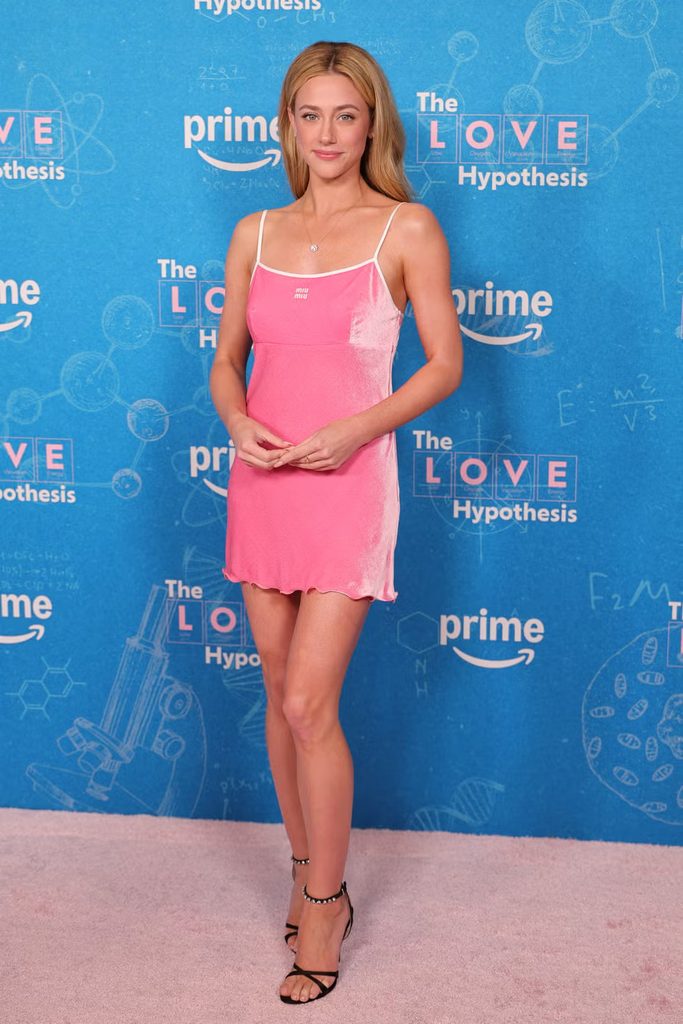
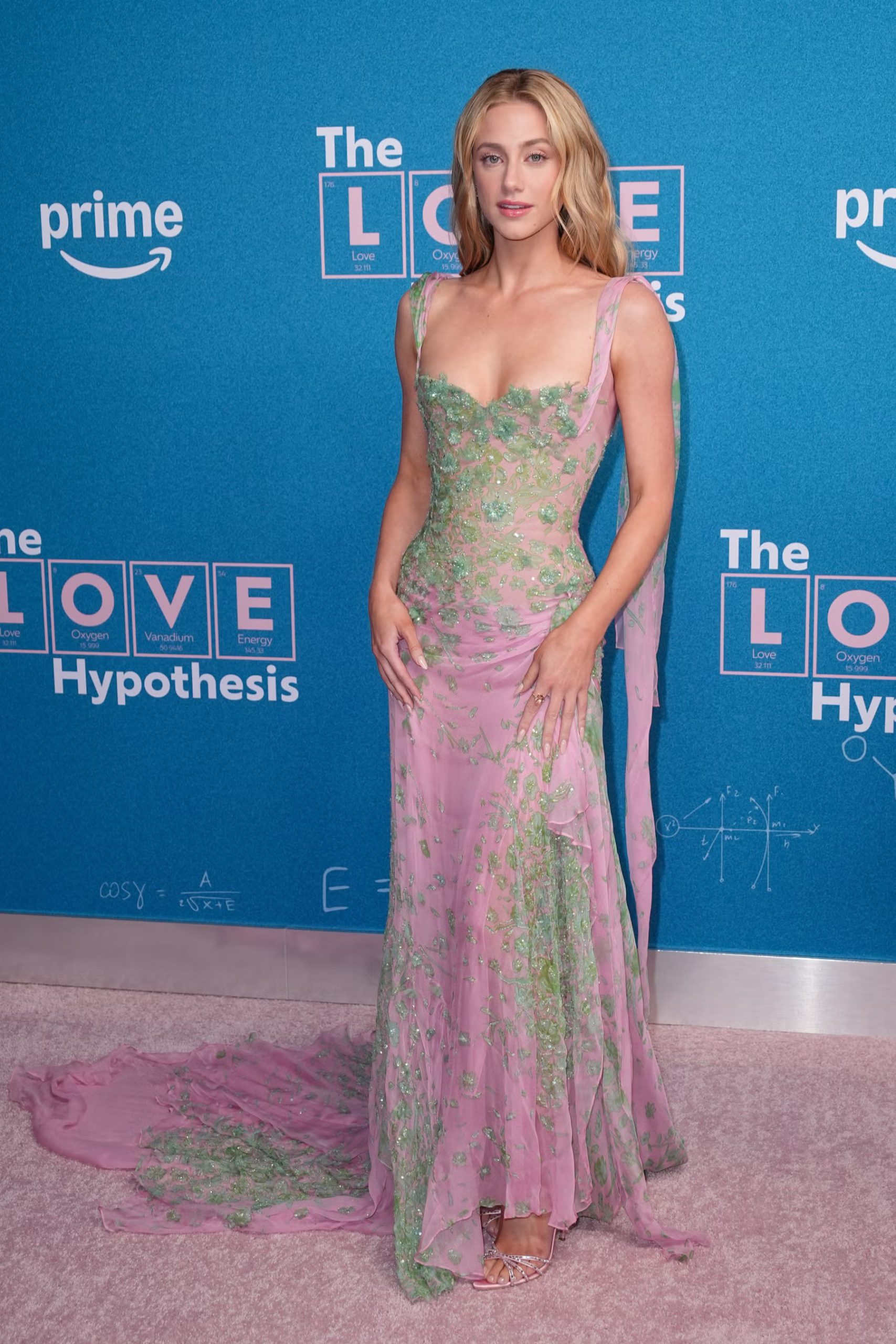
The references became even more elaborate as the press tour continued. An Elie Saab Spring/Summer 2004 couture gown, originally selected for the Gotham Television Awards, was saved for the New York premiere to create a stronger narrative moment. A custom Rodarte design nodded toward Ever After: A Cinderella Story, while a butter-yellow backless dress referenced Kate Hudson’s memorable wardrobe from How to Lose a Guy in 10 Days.
Perhaps the most challenging piece to secure was a sequined Blumarine Spring/Summer 2002 dress associated with Uptown Girls. Covered in dimensional floral details, the rare piece proved difficult to locate. Nasser spent months searching, contacting collectors, and attempting to borrow the dress, only to face repeated dead ends. Eventually, he discovered the piece through Rebe Archive and managed to get it to Reinhart, photograph it, and complete the moment within a single day in London.
Still, the wardrobe was never intended to become one long exercise in nostalgia. Nasser emphasized the importance of distinguishing between deliberate film references and Reinhart’s personal fashion identity. Alongside the homages were early-2000s Roberto Cavalli dresses, vintage Emanuel Ungaro pieces, and other looks selected simply because they reflected her taste.
Some outfits contained quieter references, too. Certain colors and details echoed elements from the film, including a dress inspired by the visual appeal of a Unicorn Frappuccino and an Elie Saab gown whose palette reflected the false-positive hypothesis test featured in the trailer.
That balance ultimately became the defining quality of Reinhart’s style throughout the era. The fashion was nostalgic, but it was never purely retrospective. Each reference was treated as a tribute rather than a costume, celebrating the actresses, designers, and costume teams who helped define the romantic-comedy aesthetic in the first place.
Through that approach, Reinhart and Nasser have created something more meaningful than a successful press-tour wardrobe. They have turned Y2K fashion into a conversation between past and present, using vintage clothing and cinematic references to celebrate the romance genre while giving Reinhart a distinctive style identity of her own.