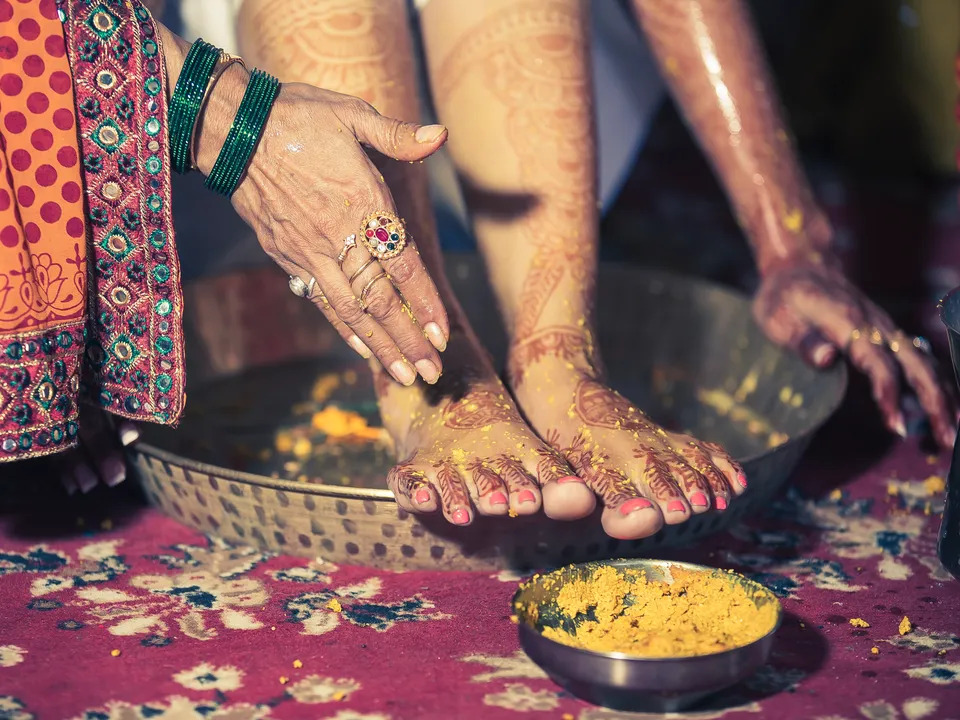
From Kitchen Staple to Wedding Tradition
In India, turmeric rarely begins as a symbol. It begins in the kitchen, among familiar spices and generations of household knowledge. Families add it to food, stir it into warm milk, and apply it to the skin. Its bright yellow color can stain fingertips and fabrics. Its traditional uses have also made it a familiar ingredient in home remedies.
When a wedding approaches, turmeric takes on another meaning. An everyday ingredient becomes part of a ritual that connects beauty, family, and cultural memory. Across generations and communities, the haldi ceremony has transformed this humble kitchen staple into one of the most recognizable features of Indian weddings.
The Cultural Significance of Haldi
The tradition reflects the belief that turmeric can prepare the bride and groom for an important transition. Relatives and loved ones apply the yellow paste to their skin as part of the preparations leading up to marriage.
The ritual is often intimate, playful, and deeply communal. Family members come together to participate in the preparations before the formal wedding celebrations begin.
Yet turmeric’s significance extends beyond the ceremony itself. It has occupied a place in Indian life for centuries, long before couples began incorporating elaborate décor, curated photographs, and fashionable themes into their haldi celebrations. Its presence remains powerful precisely because it is so familiar.
A Tradition Passed Through Generations
For many Indian families, turmeric holds memories that begin long before a wedding. It belongs to everyday cooking and traditional home remedies. Families often pass down these practices through observation and experience rather than formal instruction.
A grandmother may prepare a turmeric remedy just as her mother did. A mother may introduce the ingredient to her children through food before they understand its wider cultural significance.
By the time a wedding arrives, turmeric can carry a history that extends far beyond the couple. The haldi ceremony brings that history into view.
A bride seated among relatives, surrounded by yellow flowers and dressed in a bright traditional outfit, becomes part of a ritual that families have adapted and reinterpreted over generations. The setting may change, but the central gesture remains recognizable.
How Modern Weddings Have Transformed Haldi
Modern weddings have changed the visual language of the haldi ceremony. What was once a relatively simple household gathering can now feature elaborate floral installations, coordinated outfits, personalized décor, music, and carefully photographed moments.
Yellow and marigold shades have become closely associated with the celebration. Couples increasingly use the ceremony to express their individual styles and create a setting that reflects their personalities.
Despite these changes, the ingredient at the center remains remarkably ordinary.
That contrast helps explain turmeric’s enduring appeal. It does not need to be rare or luxurious to become meaningful. Its significance comes from familiarity, repetition, and memory.
The same ingredient found in a family kitchen can also pass through the hands of relatives gathered to bless a bride before her wedding.
The Meaning Behind Turmeric’s Golden Color
The haldi ceremony carries several layers of meaning. Turmeric has traditional associations with skin care and household remedies. Its vivid golden color creates a distinctive visual element, while the presence of family adds emotional significance.
These meanings overlap and enrich the experience.
For brides, the ceremony can mark a moment of transition. Family members often apply turmeric playfully and enthusiastically. Beneath the laughter, however, lies an awareness that the bride is approaching a significant change in her life.
The ritual creates a pause between everyday routines and the celebrations that follow. It offers family and friends an opportunity to gather around the bride before the wedding begins.
Keeping Indian Wedding Heritage Alive
This sense of transition helps explain why haldi continues to resonate with younger generations. As weddings embrace influences from around the world, many couples still seek traditions that make their celebrations culturally meaningful.
Turmeric offers an accessible connection to heritage. The ritual requires little explanation because its meaning already lives within family memories and shared experiences.
The ceremony can also express continuity through changing styles. A bride may wear contemporary jewelry, experiment with modern makeup, or choose a fashion-forward interpretation of traditional clothing. Yet the turmeric ritual remains recognizable.
The aesthetics may evolve, but the underlying gesture survives.
There is something powerful about this continuity. Trends change rapidly, while turmeric remains a familiar part of everyday life. Its golden color has appeared across generations of wedding photographs, on the hands and faces of brides and grooms, in bowls prepared by relatives, and among flowers arranged for celebrations throughout India.
The symbolism is therefore about more than the color yellow. It is about inheritance.
A Celebration of Family and Connection
A wedding is often described as the joining of two people. Indian wedding traditions, however, frequently reveal a much wider network of relationships. Parents, grandparents, siblings, cousins, and friends all become part of the celebration.
Rituals create opportunities for generations to stand together. Haldi offers one of the most tangible expressions of that connection.
The ingredient passes from one hand to another. A grandmother may apply it to a bride’s cheek. A mother may prepare the paste. Friends may turn the ceremony into a moment of laughter.
The bride receives more than turmeric. She also experiences the affection, memories, and shared history represented by everyone gathered around her.
This connection gives the tradition its lasting emotional significance. Its story does not begin at the wedding venue. It begins years earlier in homes where families use turmeric without ceremony.
Why the Haldi Ceremony Endures
On the wedding day, a familiar ingredient acquires new meaning. Turmeric becomes a golden thread connecting the kitchen to the mandap, everyday life to ritual, childhood memories to adulthood, and one generation to the next.
Its beauty lies not in its rarity but in its ability to remain familiar while carrying deeper significance.
As Indian weddings continue to evolve, the haldi ceremony may change in scale, styling, and presentation. Yet the tradition remains rooted in something remarkably simple: a household ingredient shared among people who have gathered to celebrate a new beginning.
Perhaps that is precisely why turmeric has endured. Long after the flowers fade and the photographs become memories, its significance remains tied to something deeper than decoration.
Some of the most meaningful wedding traditions are not created for the occasion. They have been living quietly in homes and families all along.