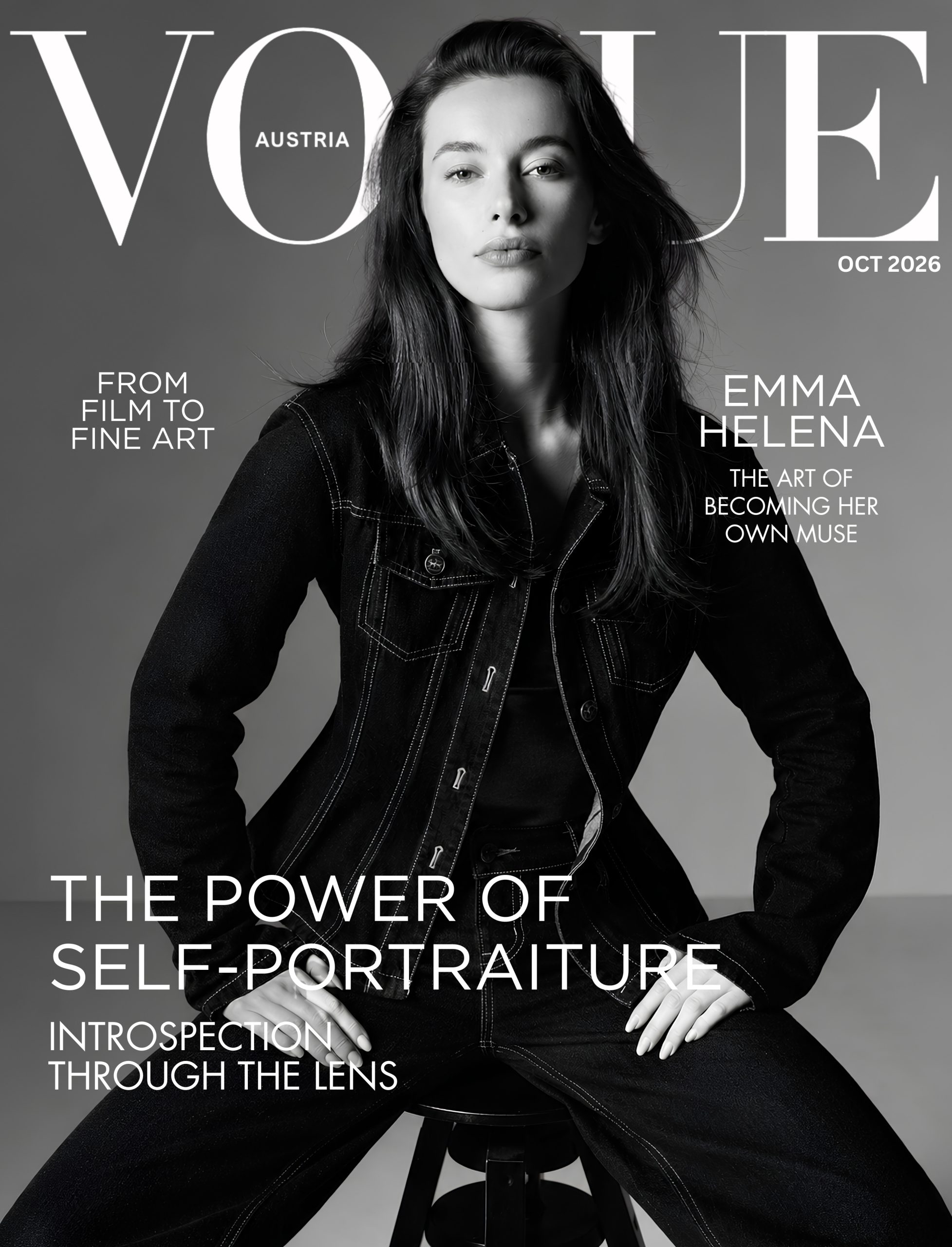
Fashion often speaks through silhouettes, textures, and carefully constructed images. Yet some of its most compelling practitioners work beyond the boundaries of a conventional look, using the camera as a means of exploring identity rather than simply presenting it. Emma Helena, known professionally as Riel Life, belongs to this more expansive creative conversation. Working as a model, photographer, and self-portrait artist, she approaches image-making as an evolving language, one shaped by movement, instinct, and the subtle relationship between the body and its surroundings.
A Dutch creative professional who works internationally, Emma Helena began modeling professionally around six years ago. Her work is recognised for its expressiveness, versatility, and distinctive approach to posing. Rather than relying on a single visual signature, she explores a wide range of gestures and facial expressions, allowing each image to carry its own atmosphere. Her style can feel sculptural and abstract, but it remains rooted in a clear sense of physical presence and emotional nuance.
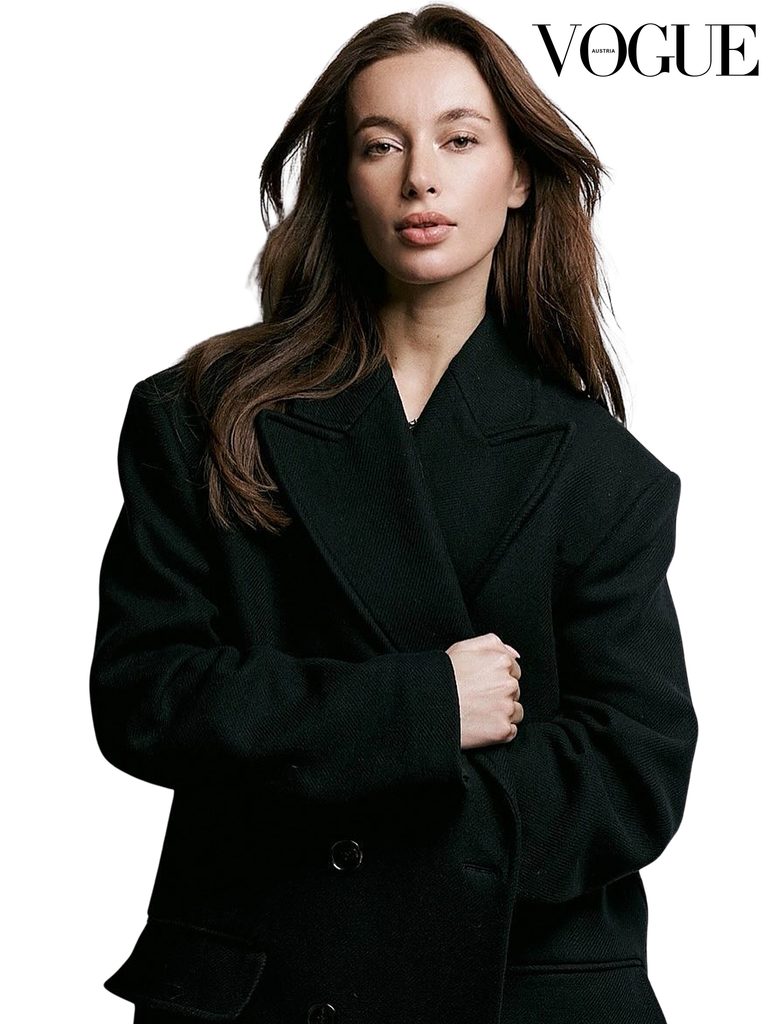
What makes Helena’s practice particularly interesting is that she is not only the subject in front of the lens. Photography was an important part of her creative life before modeling became a central profession, and she continues to make images of her own. While she now spends much of her working time being photographed by other artists, she has maintained an independent practice shaped by intuition and a desire to communicate what she sees and feels. Moving between the roles of model and photographer gives her an unusual understanding of the image-making process: she knows both the vulnerability of being observed and the freedom that can come from controlling the frame.
Her self-portrait work developed further during the pandemic, when she began experimenting with analog photography. The process offered a way to slow down and create a more personal visual record. Film introduced its own limitations and surprises, encouraging a relationship with the camera that was less about immediate perfection and more about attention, timing, and discovery. Working first with 35mm film and later with medium format, Helena built a body of self-portraits that reflects both technical curiosity and a willingness to explore unfamiliar territory.
A recurring interest in her photography is the connection between people and the natural world. In her double-exposure work, human expressions and body language meet organic forms, textures, and landscapes. The images consider how closely people remain connected to nature, even when modern life makes that relationship feel distant. Rather than spelling out a single interpretation, Helena leaves space for ambiguity. The resulting photographs invite viewers to notice parallels, contrasts, and emotional associations that can emerge when separate visual elements share the same frame.
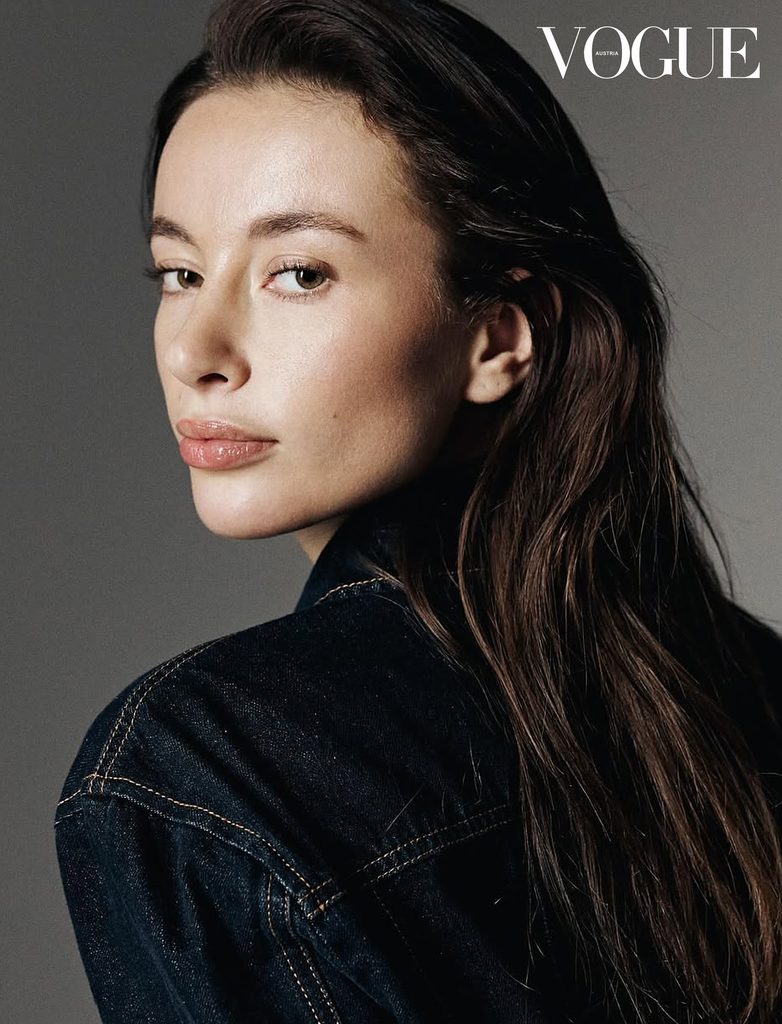
That same curiosity runs through Helena’s wider creative practice, which extends beyond modeling and photography into other forms of expression, including illustration, painting, singing, acting, pottery, and writing. Her work has been exhibited twice at Imagenation Paris and once at Imagenation Milan. In 2023, she was also invited to Photopia Hamburg, where she performed a self-portrait act using a Mammoth film camera capable of producing a large-format 20-by-24-centimetre Polaroid. The performance brought the process of making a self-portrait into the open, turning an often private exchange between artist and camera into a shared event.
Helena’s first self-portrait book gathers more than five years of work into a carefully curated hardcover collection featuring over one hundred self-portraits made on film. The publication gives a wider view of a practice that can otherwise be encountered one image at a time. Seen together, the photographs become a record of experimentation and change: a study of how expression shifts with pose, light, framing, and the artist’s own evolving perspective. The book also reflects her interest in making physical objects from photographic work, allowing images to be experienced beyond a screen.
In fashion and art photography, the model is sometimes treated as a canvas for someone else’s vision. Helena’s work complicates that distinction. She collaborates with photographers from varied backgrounds while continuing to develop an image-making language of her own. Her experience behind the camera can help her understand the practical demands of a shoot, communicate ideas, and guide emerging photographers, while her modeling practice keeps her engaged with the collaborative energy of the set. Each role informs the other without reducing either to a secondary pursuit.
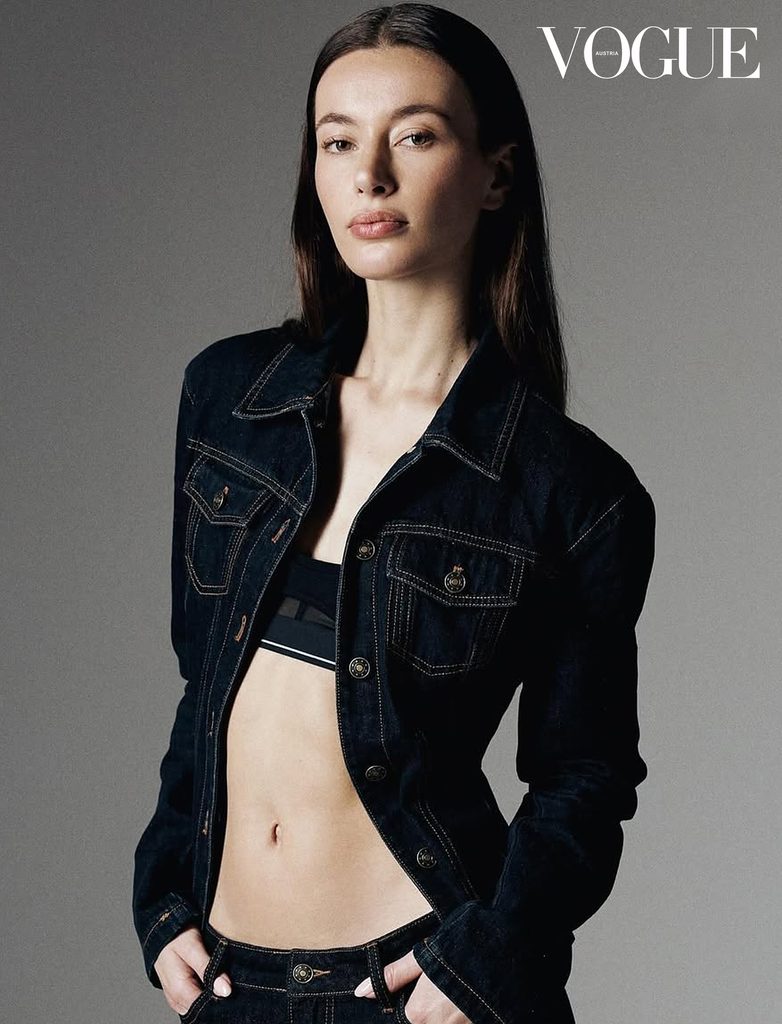
There is a quiet independence at the centre of this approach. Helena’s images are not simply about how a person appears, but about how a person can inhabit a frame, experiment with identity, and find meaning in visual form. The combination of expressive posing and self-directed photography allows her to move between interpretation and authorship. It also creates a practice that is open to change, with new techniques and creative interests continually adding to the vocabulary of her work.
For Emma Helena, the camera is both a tool of collaboration and a space for personal exploration. Her career demonstrates that modeling and authorship need not be separate identities; they can be complementary ways of understanding the body, emotion, and visual storytelling. Whether she is working with another photographer or composing a self-portrait on film, the aim is not simply to produce an image, but to discover what the image might express.
In an image-saturated culture, the most memorable work often comes from a distinctive point of view rather than a single trend. Helena’s practice draws strength from that principle. By moving between modeling, photography, and self-portraiture, she continues to explore how people relate to themselves, to others, and to the natural world around them. Her work suggests that the camera can do more than record appearance: it can become a place to experiment, reflect, and make visible the many forms a creative identity can take.