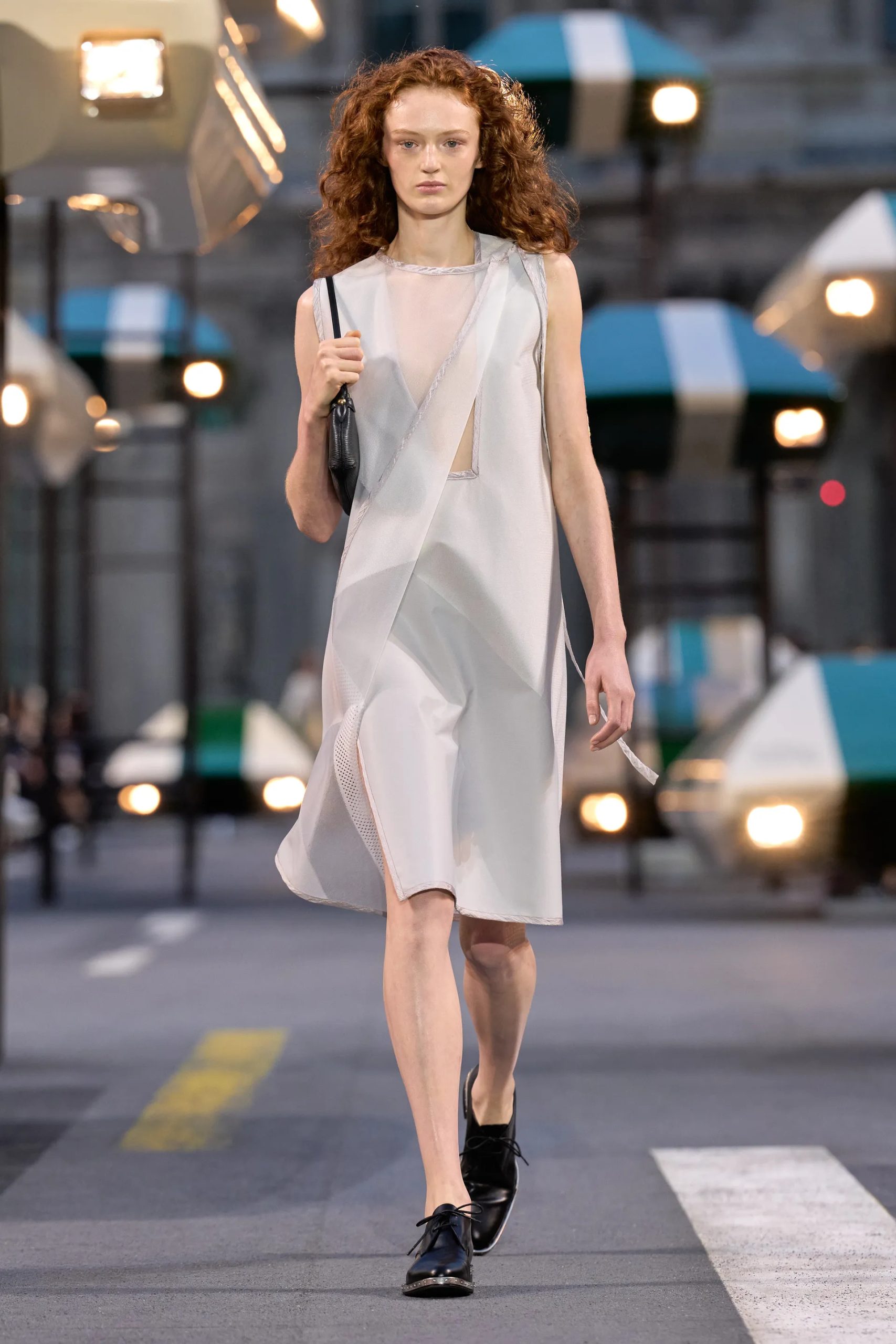
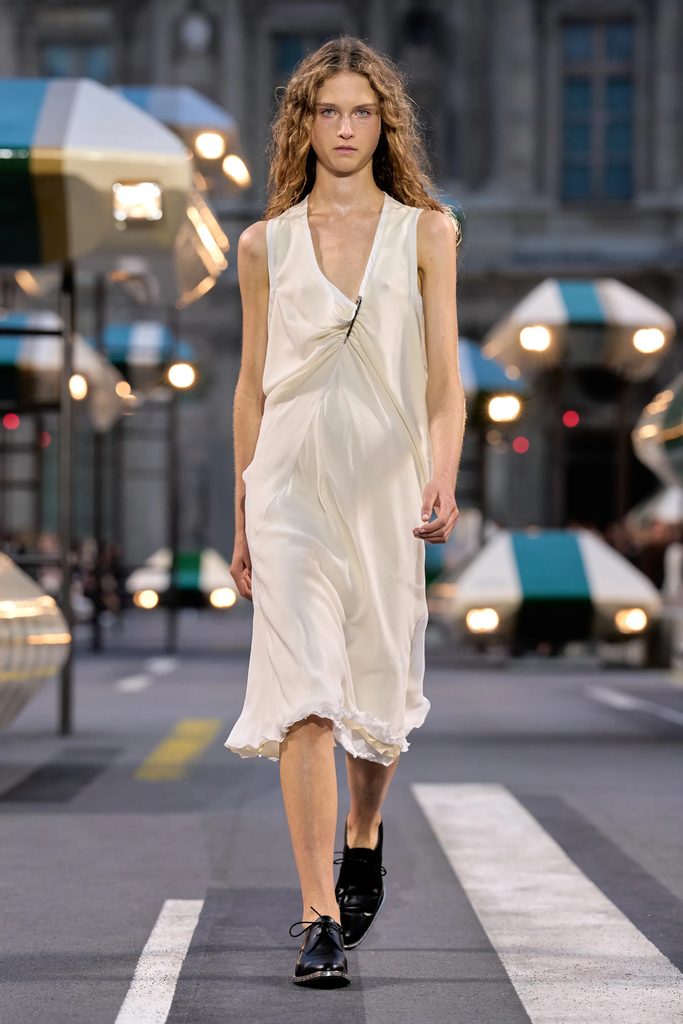
Louis Vuitton transformed Paris Fashion Week into a vision of tomorrow for its Spring 2027 ready-to-wear presentation, turning the Louvre’s Cour Carrée into an extraordinary scene that appeared to have been lifted from a futuristic animated world. The setting featured flying cars hovering above the audience, glowing red tail lights, and Damier check detailing that immediately connected the spectacle to the visual language of the French luxury house.
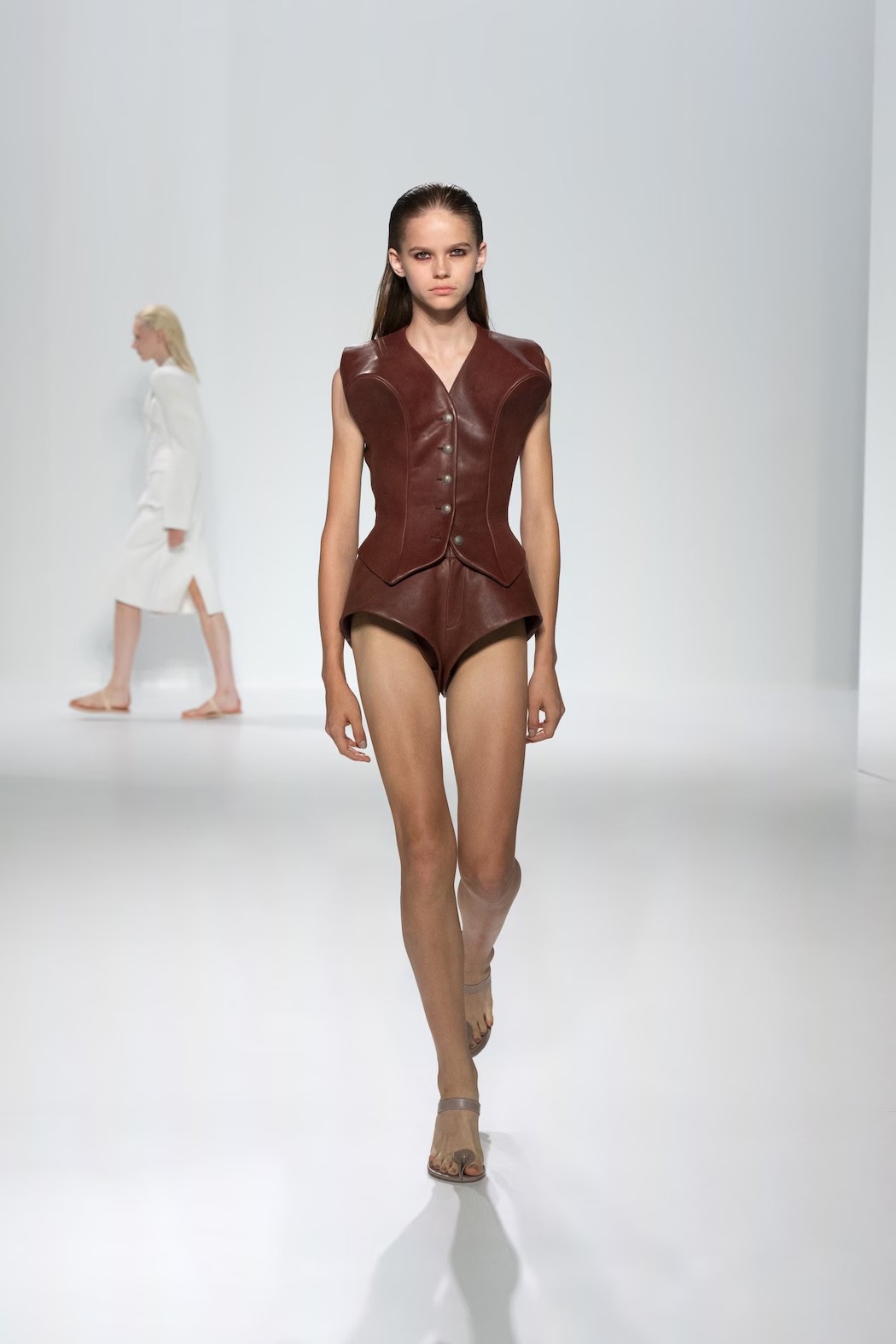
Yet beneath all the futuristic theater, Nicolas Ghesquière was exploring an idea that was much more grounded in everyday life. Rather than simply imagining what people might wear in the distant future, the Louis Vuitton creative director focused on how clothing interacts with the human body. His Spring 2027 collection centered on an “ergonomic” approach to fashion, putting movement, comfort, and the shape of the wearer at the heart of the designs.
The contrast between the elaborate setting and the practical philosophy behind the collection made the presentation particularly intriguing. The futuristic environment suggested speed, technology, and fantasy, while the clothes were ultimately concerned with something much more familiar: how fashion feels when a person actually lives in it.
Ghesquière has long been interested in the relationship between technology and clothing. His history includes some of fashion’s most futuristic experiments, including the metallic C3PO-inspired leggings he introduced during his Balenciaga years two decades ago. That legacy made the futuristic staging at Louis Vuitton feel like a subtle callback, but the designer’s latest direction was less about predicting the future and more about reconsidering the present.
The ergonomic idea allowed the collection to focus on the body itself. Instead of treating clothing as something that simply sits on a figure, Ghesquière approached garments as pieces designed around movement and physicality. The concept gave the collection a modern relevance, particularly at a time when fashion increasingly balances visual impact with practicality.
The Louvre setting amplified that conversation. With its historic architecture providing a backdrop for flying vehicles and futuristic details, the presentation created a deliberate collision between heritage and innovation. It was a fitting environment for Louis Vuitton, a house whose identity has always been shaped by travel, movement, craftsmanship, and an appetite for exploring new territory.
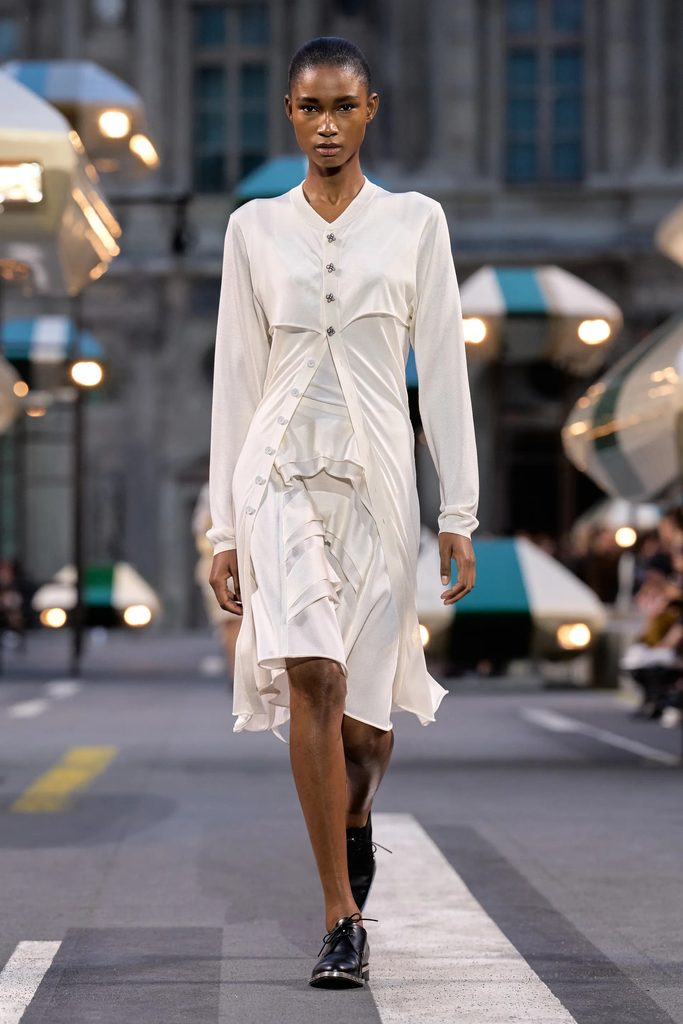
The Damier pattern appearing on the futuristic vehicles also reinforced the idea that the past and future could coexist. One of Louis Vuitton’s most recognizable visual signatures was transformed into something that belonged to an imagined tomorrow, demonstrating how familiar house codes can be reinterpreted without losing their identity.
Ultimately, the Spring 2027 collection was not simply an exercise in science fiction. The futuristic spectacle may have captured attention, but Ghesquière’s real focus was the relationship between clothing and the person wearing it. By placing an ergonomic, body-conscious philosophy at the center of such an extravagant presentation, Louis Vuitton suggested that the future of fashion may not necessarily be about looking more futuristic.
It may be about making fashion work better for the people who wear it.